English| EUR
Suggested for you
More currencies
Choose a language
Every rider at 150 Trig Hill Road is fitted into a harness before the first cable, and that fitting comes with criteria. This Waiheke Island zipline weight limit guide sets out why the thresholds exist, who they affect, and how to verify the current numbers. It also flags what is worth settling before the ferry crossing rather than at check-in.
Quick answer
EcoZip Adventures applies both a minimum and a maximum rider weight, and the current figures should be confirmed directly with the operator on +64 9 372 5646 or the official site before booking. The thresholds follow harness sizing and dual-cable braking performance. Related criteria cover health conditions and pregnancy. The three-hour experience runs daily, 09:00–17:00, so calling ahead is straightforward.
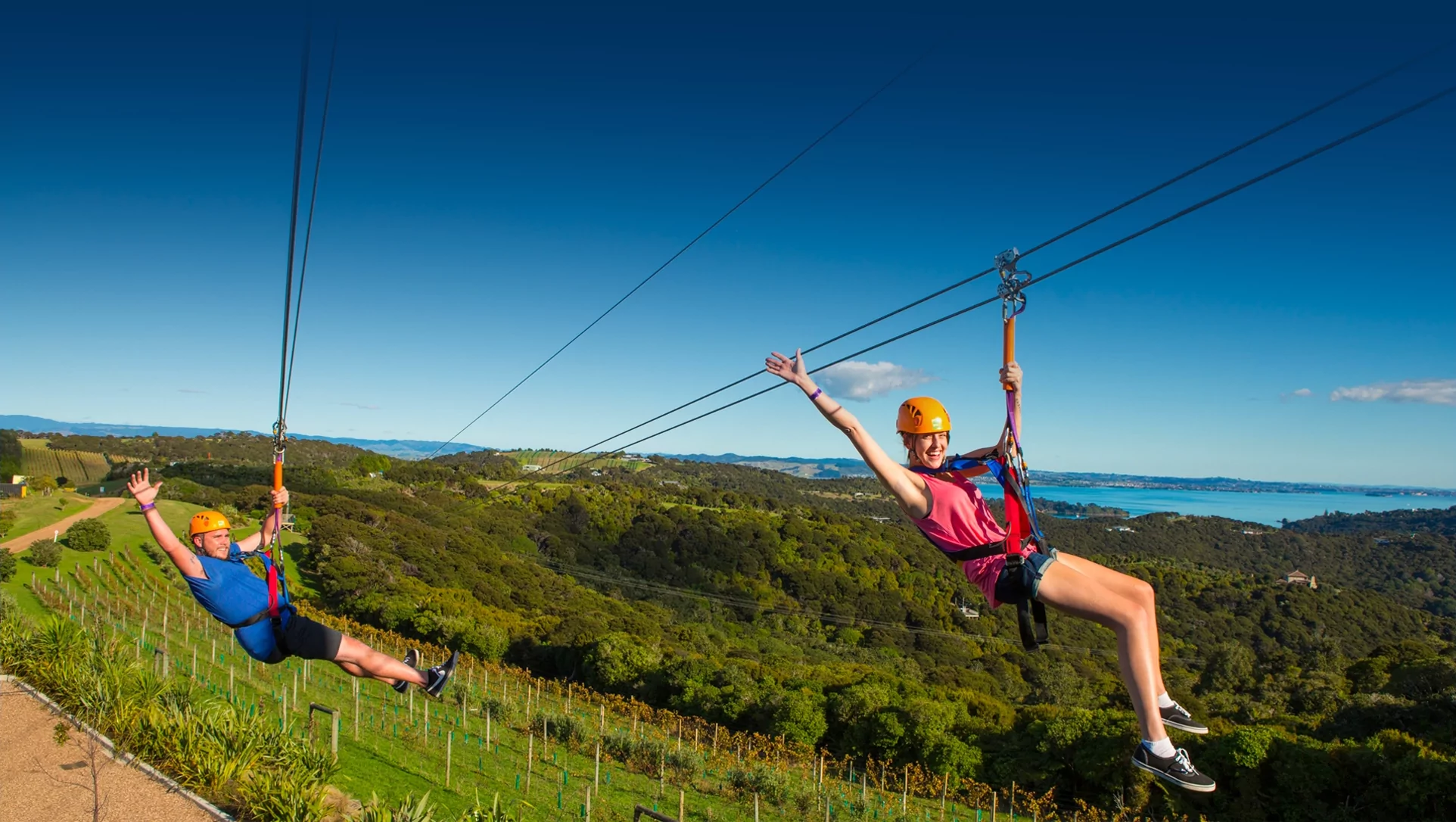
The ziplines strung above Trig Hill Road run on a dual-cable system: every rider is clipped to two independent lines for the entire descent, with a secondary brake sitting behind the primary one. That engineering is the reason a waiheke island zipline weight limit exists at all. Harnesses are sized to a working load, and the pulley carrying a rider across the valley behaves differently under different masses. Too light, and a rider can stall short of the far platform. Too heavy, and arrival speed at the braking zone climbs past what the hardware is rated to absorb. Most visitors meet these rules for the first time at check-in, which is late. EcoZip Adventures runs a single three-hour Waiheke Island zipline tour that pairs the descents with a guided walk back up through regenerating native bush, past kauri and nikau, with the Hauraki Gulf, Rangitoto and the Auckland skyline opening between the trees. Everyone in a booking moves through that circuit together. A rider turned away at the harness fitting does not simply wait at the base — the whole party's afternoon reshapes around it. The same holds for health declarations and for anything carried loose in a pocket. Published participant criteria shift as equipment is recertified, so numbers repeated on forums and third-party listings age badly. The reliable move is to confirm current rider requirements with the operator directly, by phone or through the official site, before any ferry ticket is bought. Travellers crossing from downtown Auckland to Matiatia spend roughly forty minutes on the water, and that is not the moment to discover a restriction. Anyone booking for a mixed-age family, a school group or a corporate day should settle the waiheke island zipline weight limit in the same conversation that confirms head count. None of this is arbitrary gatekeeping. The canopy zipline sits inside a working conservation project, and the discipline that governs the planting also governs the hardware: rated, inspected, documented, replaced on schedule. Riders who arrive already knowing they meet the criteria spend the morning watching the gulf rather than watching a clipboard.
“Restrictions on a dual-cable zipline are physics before they are policy — the pulley does not negotiate.”
Zipline harnesses are engineered for a defined weight and body-size range, so honest disclosure at check-in protects both you and the guides who rig your line. Declaring a health condition or a weight near the limit is a safety step, not a social awkwardness.
A few preparations in the weeks and hours before your tour will make the pre-departure weigh-in and gear fitting quick and undramatic.
The zipline facility operates daily throughout the week. Visitors are encouraged to plan their visit within the recommended arrival window to ensure adequate time for the experience.
The zipline location is situated at 150 Trig Hill Road on Waiheke Island. Visitors typically access the site by taking a passenger ferry from downtown Auckland to Matiatia Wharf, followed by local transport to the facility.
Fullers ferry from Auckland CBD to Matiatia Wharf
Waiheke Bus service from Matiatia Wharf to Ostend
Local taxi from Matiatia Wharf or Ostend
Plan your journey to arrive between 09:00–13:00 to ensure sufficient time for the 3-hour tour experience and ferry transfers before the location closes.
Everything you need to know about waiheke island zipline weight limit
The operator maintains a specific weight range for safety reasons, which typically falls between 30kg and 125kg. Please consult the official website to verify these figures for your specific booking date.
Participants must meet both age and physical criteria to ensure a safe experience in the eco-forest. Children usually require a guardian to accompany them if they meet the minimum weight and age thresholds.
Safety protocols are strictly enforced for all guests, and participants outside the specified range will be unable to zip. You should verify your weight prior to booking to avoid disappointment upon arrival.
The harness system is designed to accommodate the standard weight range provided by the operator. Technicians will adjust your equipment on-site to ensure a secure fit throughout the adventure.
While the weight limit is a primary safety constraint, staff also ensure that the harness fits securely regardless of height. Safety equipment functionality remains the priority for all participants during the forest canopy tour.
When booking for multiple people, you must ensure each member of your group falls within the allowed range. Review the participant guidelines thoroughly to confirm everyone is eligible for the canopy tour.
Comfortable, closed-toe footwear is required for the forest walk and zipline experience. Dress in weather-appropriate clothing, as the tour operates across the canopy in various conditions.